Post-Traumatic Stress Disorder or best known as simply PTSD is a mental health malady that is caused by extremely stressful or terrifying events. This condition is a very significant concern for those who work the trenches of 911 dispatching. It is very common for dispatchers to experience a secondary trauma from their exposure to the most distressing emergency calls. I have PTSD.
I dedicated nearly four decades of my life to serving the public during their most critical moments, including EMS and 911 dispatching. I spent eleven years in an ambulance, but then I experienced my own life-altering trauma event when I was involved in a horrific car accident. This accident left me unable to lift, walk on uneven surfaces, or even get down to the level of my patients. While working in EMS, I was also teaching EMS courses in Northwest Minnesota and Northeast North Dakota. Consequently, when the accident occurred, I had to resign from my position at the college where I taught. I found myself questioning my next move, wondering what lay ahead. Then, I discovered a position with the Polk County Sheriff’s Office that seemed to align with my knowledge and ability to handle emergency situations. I held a 911 telecommunication position for nearly twenty-eight years. Both of these pivotal positions had a profound impact on my life.
As a younger woman in positions of responsibility and raising my family, I failed to recognize the so-called PTSD that I later learned about. It wasn’t until later in life that I developed emotional numbness. To suppress the constant intrusive thoughts, I found ways to occupy my mind through alcohol, sex, and anything else that could distract me. Hypervigilance consumed me, and the constant worry of the next call or the events I knew would strike a loved one caused immense anxiety. The most distressing aspect was the intrusive thoughts that couldn’t be silenced. I relived countless calls I made on the ambulance, and even worse, the calls from individuals experiencing traumatic events themselves. The callers and patients became intertwined in my mind, taking over completely. It wasn’t just a few calls I could replay; unfortunately, there were many that lingered in my thoughts. I suppose this is the cumulative trauma that people talk about.
While the trauma I was dealing with early on was difficult that ugliness of the demon named “Cumulative Trauma” unexpectedly appeared when I was not looking. It didn’t ask permission to enter my home. It lacked patience to wait for my permission; instead, it forcefully pushed the door open and walked in, disregarding my reaction. It became an integral part of me, akin to a family member, accompanying every aspect of my life. Now, I realize that it was a gradual process that hollowed me out, leading to periods of extreme distress. The person who loved wearing masks wore them daily to conceal their true self. They hid behind a fake smile, concealing the fear that consumed them daily. This way, no one would know that a stranger had taken control of their movements and interactions with colleagues, friends, and family. I lived in a dark empty, lonely hole where there was no ladder for me to climb out. I lived in the dark, alone with this pain, this horror, until I could not wait for another tragedy that would “hopefully” replace one of the horrors that I lived with, which unfortunately did not happen. It just jumped into the pile I held and made a place.
I will never hide the fact I am in therapy. Who would not want to find the way out of the dark, a way to live a life that feels relaxed, fun and not waiting for a tragedy to happen? I needed to find that. This road to learning to live with PTSD is difficult. It does not just happen overnight. The sessions are numerous and oh so very hard to sit through. When you sit with intrusive thoughs, hypervigilence, emotional numbing, grief nearly every week, well it becomes almost too much to bear. Strength is vital. But that is one thing that I found in my years of emergency services is that strength is most important as you have to be strong to answer the woman whose boyfriend just committed suicide while you answered the call in time to hear the shots, or a woman taking me on “the walk” she could not do alone to find her spouse who had made the decision to end his life. You have to have strength to help those whose loved ones are down and you have to give instructions for CPR while you cry silent tears right alongside of them. I will continue to live with my many visits with my therapist as I learn to retrain my brain and not allow the horrors to run who I am. One day I will see beyond that dark and see the brilliance of light.
“In the depths, shadows creep, like whispers in the night,
The past emerges slowly, obscured from the light.
Each though a heavy anchor, chained deep in the oul,
Yet hope still flickers softly, as dreams begin to roll.”
~ Unknown
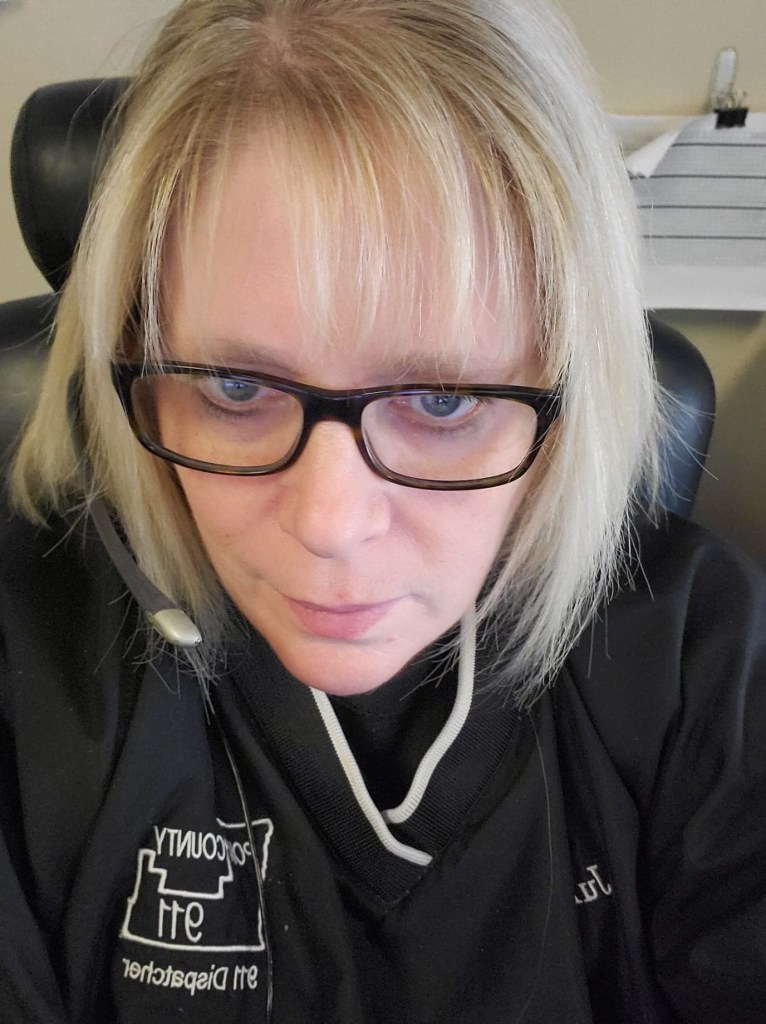


 As a 911 dispatcher we are perceived to be strong type-A personality types. We answer that phone by the second ring and make extremely fast decisions in some of the most tragic moments of other’s lives. We attempt to deal with these calls so they do not follow us home. We appear to be strong, a rock; handling it all with ease; nothing can shake us.

 Life As I Live It